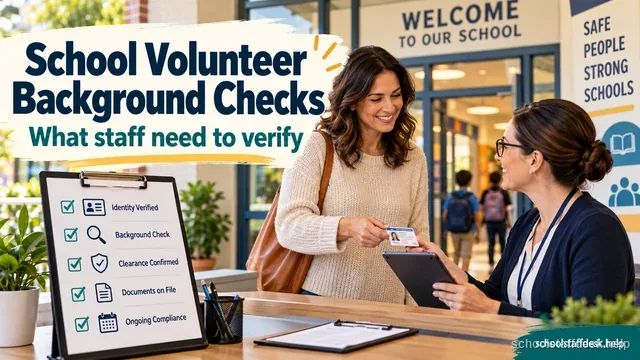
Start with the role, not a nationwide rule
There is no single federal rule telling every K-12 school which volunteers to screen or how often. Requirements can come from state statutes, agency guidance, district policy, or a program. Rules for paid employees, contractors, or child-care workers may not cover unpaid school volunteers. Check the rule’s scope before copying another group’s form.
Describe the assignment: duties, frequency, supervision, and student access. Note whether the adult may transport students, supervise them, or communicate privately. “Parent helper” is too broad to classify. If a one-time event becomes weekly tutoring, send the changed role for review.
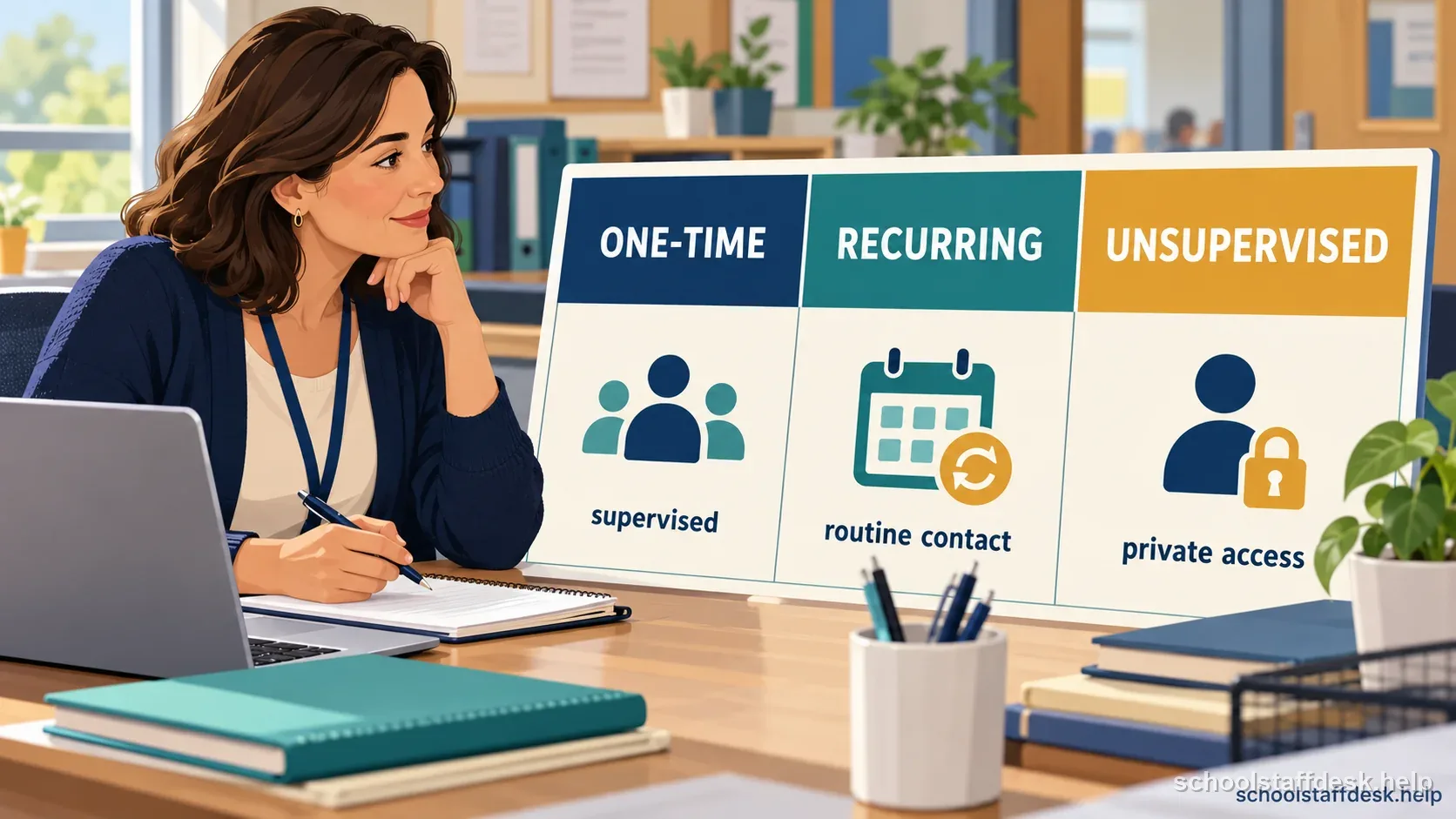
Classify contact and supervision before requesting a check
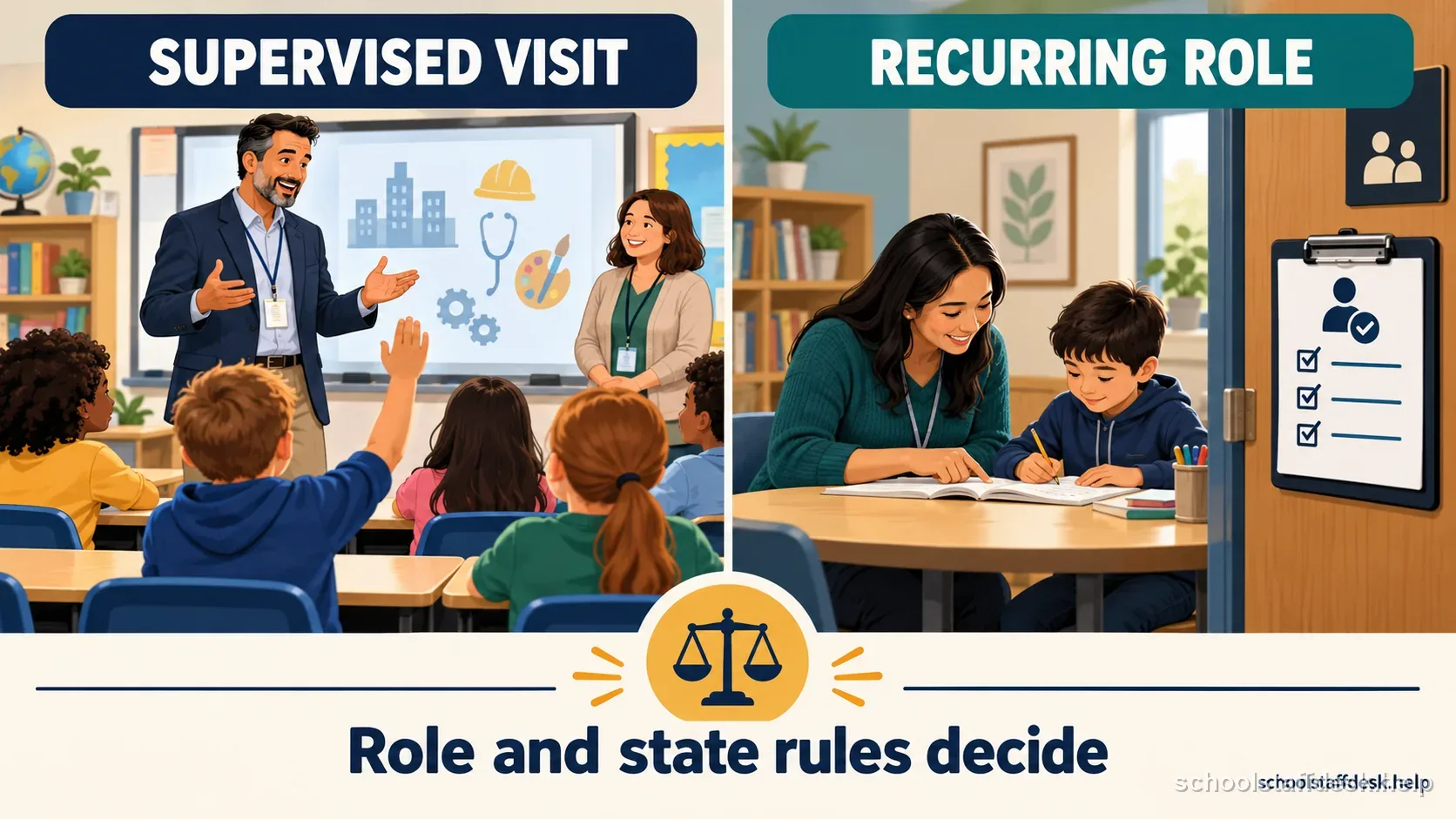
Distinguish a one-time supervised visit from routine service or unsupervised access. Ask whether the adult handles student care or movement, can be outside an employee’s sight, drives students, attends overnight trips, or sees records. These facts help the reviewer apply the rule; they are not a universal risk score.
A visitor badge is not proof that volunteer clearance is complete. A check from another school, employer, or league may use a different authority and may not transfer. Confirm what the district accepts and who verifies it. Recheck the role if duties or supervision change.
| Assignment | What to document | What to verify |
|---|---|---|
| One-time supervised visit | Date, location, staff supervisor | Visitor rules and any event-specific district requirement |
| Recurring student contact | Frequency, duties, care or guidance role | State definition of routine contact and local volunteer policy |
| Unsupervised, driving, or overnight role | Who supervises students and when adult is alone | Specific state, district, travel, and transportation rules |
| PTA or booster volunteer | Who recruited and directs the person | Which organization owns approval and accepted clearance proof |
State examples show why details matter
Pennsylvania requires clearances for volunteers responsible for a child’s welfare or with “direct volunteer contact,” including care, supervision, guidance, or control plus routine interaction. The state defines this as regular and repeated contact integral to the volunteer role. Its education agency says occasional visitors, guest readers, and supervised field-trip or dance chaperones normally do not need covered checks when they are not routine or responsible for a child’s welfare.
Covered Pennsylvania volunteers generally need state police criminal-history and child-abuse-history certifications. For an unpaid role, a person who lived in Pennsylvania continuously for the prior 10 years can use a written affirmation instead of an FBI certification under the state process. Other residency or prior-check facts can change that step, so use the current agency FAQ.
Florida Statute §1012.465 covers specified noninstructional district employees, contractors, and volunteer school chaplains who meet conditions involving access to school grounds with students present, direct student contact, or control of school funds, subject to exceptions. It does not cover every volunteer. California DOJ says CalVECHS is not currently available to public or private schools and directs them to follow applicable statutes. Recheck current state guidance.
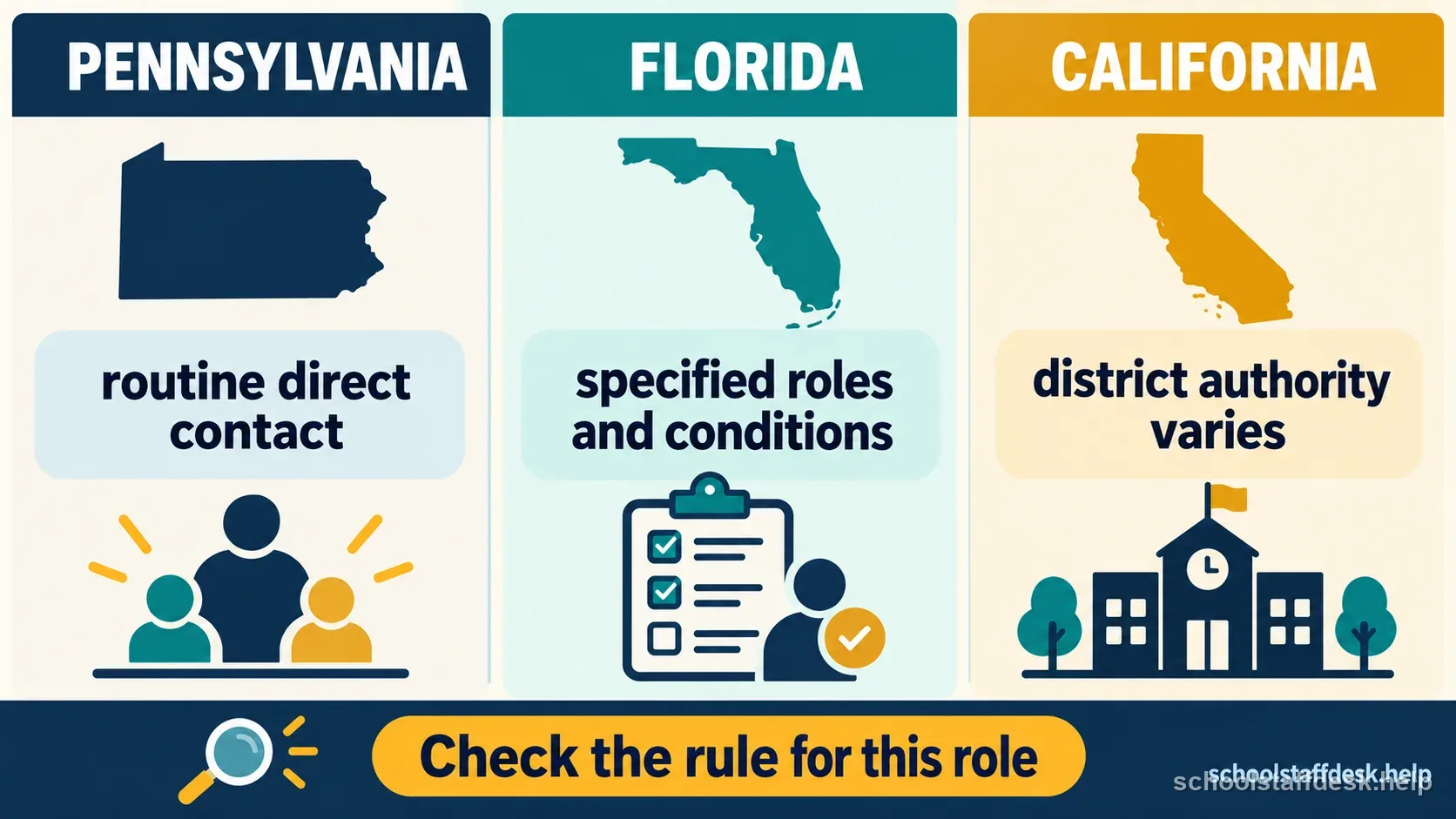
| State | What the cited rule addresses | Staff next step |
|---|---|---|
| Pennsylvania | Direct volunteer contact or responsibility for welfare; routine interaction | Check the state clearances, residency facts, and the role’s frequency |
| Florida | Specified noninstructional employees, contractors, and volunteer chaplains meeting statutory conditions | Ask which statute and exception apply to the volunteer’s actual status |
| California | DOJ says CalVECHS is currently unavailable to public and private schools | Identify the school-specific statutory authority and district process |
Use a written clearance workflow before the first shift
After classifying the role, give the applicant district instructions. Identify who sends the application, receives the result, and confirms training or an agreement. Tell applicants not to send full reports to teachers or PTA organizers unless the approved process requires it.
Track only necessary status: applicant, role, completion date confirmed by the reviewer, training, and any required renewal. A coordinator can confirm “approved to begin” without reading a report. If no reviewer is named, pause scheduling and ask the principal, HR, or volunteer office.
Before the first student-facing shift, match approval to the duties. A supervised daytime clearance should not silently become approval to drive, work alone, travel overnight, or access records. Document changes and ask the reviewer to confirm them.
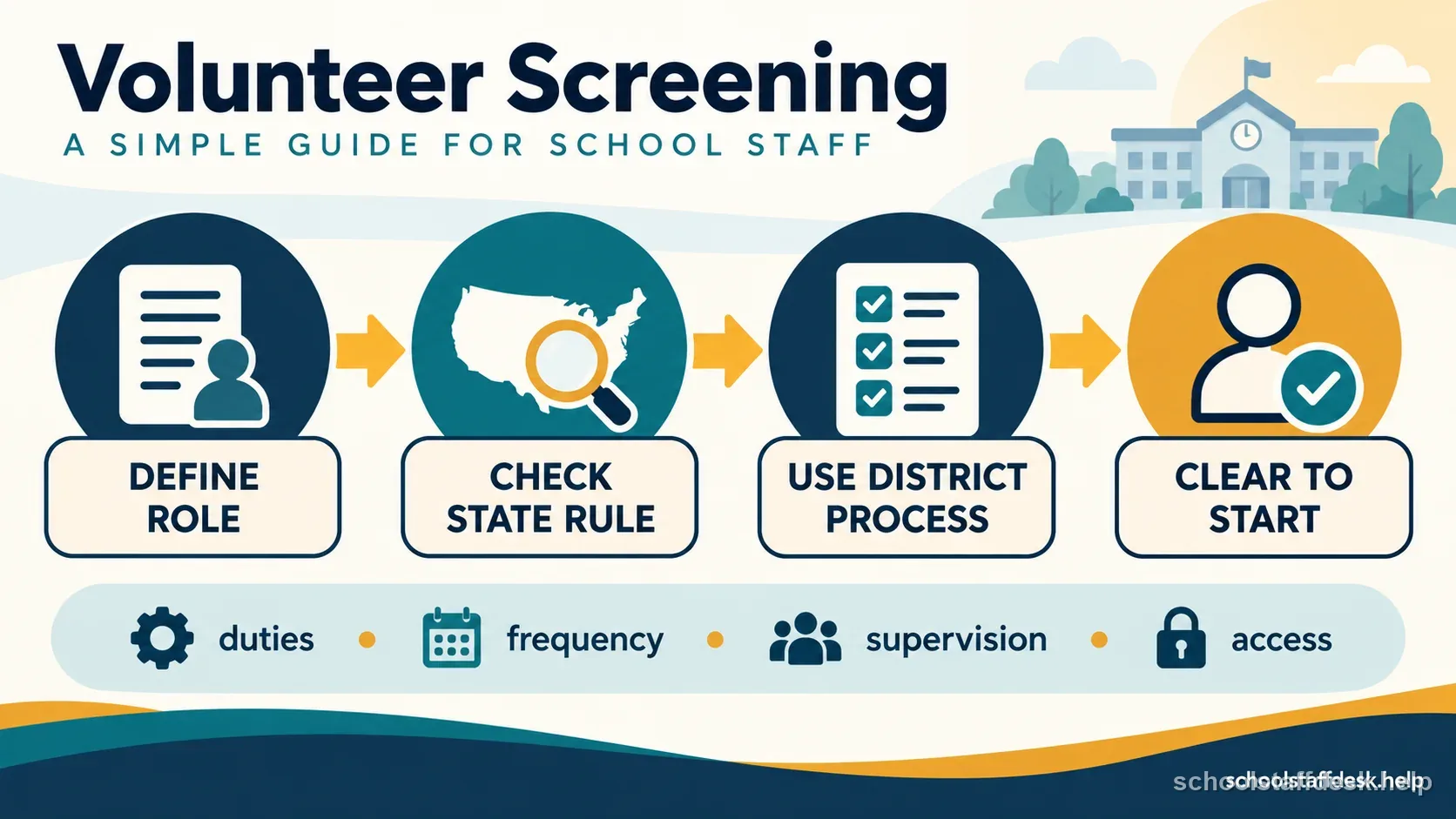
Before the volunteer’s first assigned shift
- Write the duties, frequency, student access, and supervision plan in the role description
- Check current state guidance and the district policy for that exact assignment
- Send the applicant through the approved application, training, and review process
- Have the authorized reviewer confirm approval before the volunteer begins
- Record only necessary status and renewal information in the approved system
- Reclassify the role before adding driving, one-to-one contact, overnight travel, or record access
Do not infer approval from a visitor badge, another organization’s check, or a pending application.
Work two Pennsylvania examples before you rely on a date
Example one: Pennsylvania volunteer certifications were issued June 10, 2021. The education FAQ says certifications obtained within the previous 60 months can be reused for volunteer activity. On June 9, 2026, they are within that window. On June 11, they are one day past the 60-month anniversary; ask for current instructions rather than relying on portability. Confirm the district rule too.
Example two: an unpaid Pennsylvania volunteer has lived in the state continuously for 9 years and 4 months and has no FBI certification obtained since moving there. The 10-year condition is short by 8 months, so the person should not use the 10-year affirmation instead of an FBI check under the described process. Ask the reviewer to direct the application. These are Pennsylvania examples, not national rules.
Set renewal dates from the controlling rule
Record the source and date behind each renewal reminder. Pennsylvania allows certain volunteer certifications obtained within the previous 60 months to be reused, while an employer or district may require an earlier update. Do not apply that period elsewhere. Albuquerque Public Schools publishes a two-year cycle for its own volunteers; that local rule is not portable.
If the district adopts an earlier interval where permitted, label it as policy and apply it consistently. Define what happens when a volunteer leaves, returns, changes roles, or has an overdue renewal. A calendar alert needs an owner, and staff should not schedule a volunteer past the applicable date.
Route a flagged or disputed result to the authorized reviewer
A report can be incomplete, mismatched, or outdated. Teachers and event organizers should not interpret it, promise a record is harmless, or declare automatic disqualification. Follow the approved process for identity questions, notice, appeal, and eligibility. Pennsylvania directs school staff reviewing certain reports to make a fitness determination and consult the solicitor about statutory offense lists.
For employment decisions using a consumer reporting company, FTC guidance describes written disclosure and permission, plus steps before and after adverse action. Volunteer screening can involve different facts and authority, so counsel or the compliance lead should decide whether those duties apply. Pause the assignment while a dispute is resolved; do not circulate the report.
Protect screening records and explain the process carefully
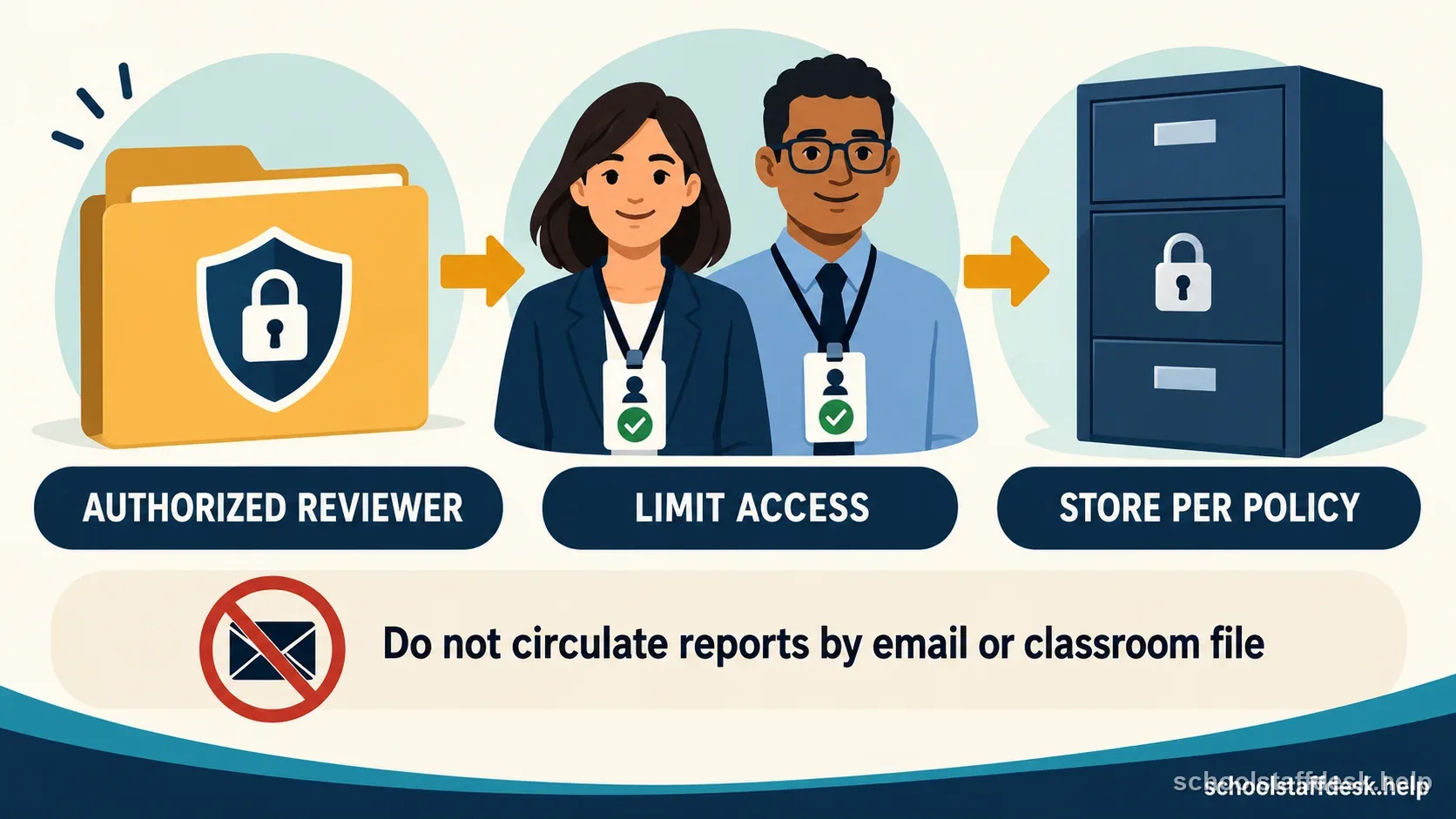
Keep reports out of classroom binders, broadly shared drives, PTA spreadsheets, and routine email. Limit access to the reviewer and staff with a documented need. Follow applicable law and the district records schedule for retention and secure disposal. Do not invent a period based on a vendor portal.
Families can be told what the public policy requires and where to ask questions. Whether staff may confirm another person’s clearance depends on privacy and records rules. Say: “The district coordinator handles volunteer approvals. I can share the public process, but I cannot discuss another person’s screening record.”
- Confirm the role ownerName the coordinator and authorized reviewer.
- Record the decision dateUse the approved system and status field.
- Set a rule-based reminderStore the actual source and due date.
- Recheck changed dutiesUpdate approval before adding access or travel.
Track only the status needed to operate the program; keep reports under the designated reviewer’s controls.
Coordinate PTA, booster, coach, and trip volunteers in advance
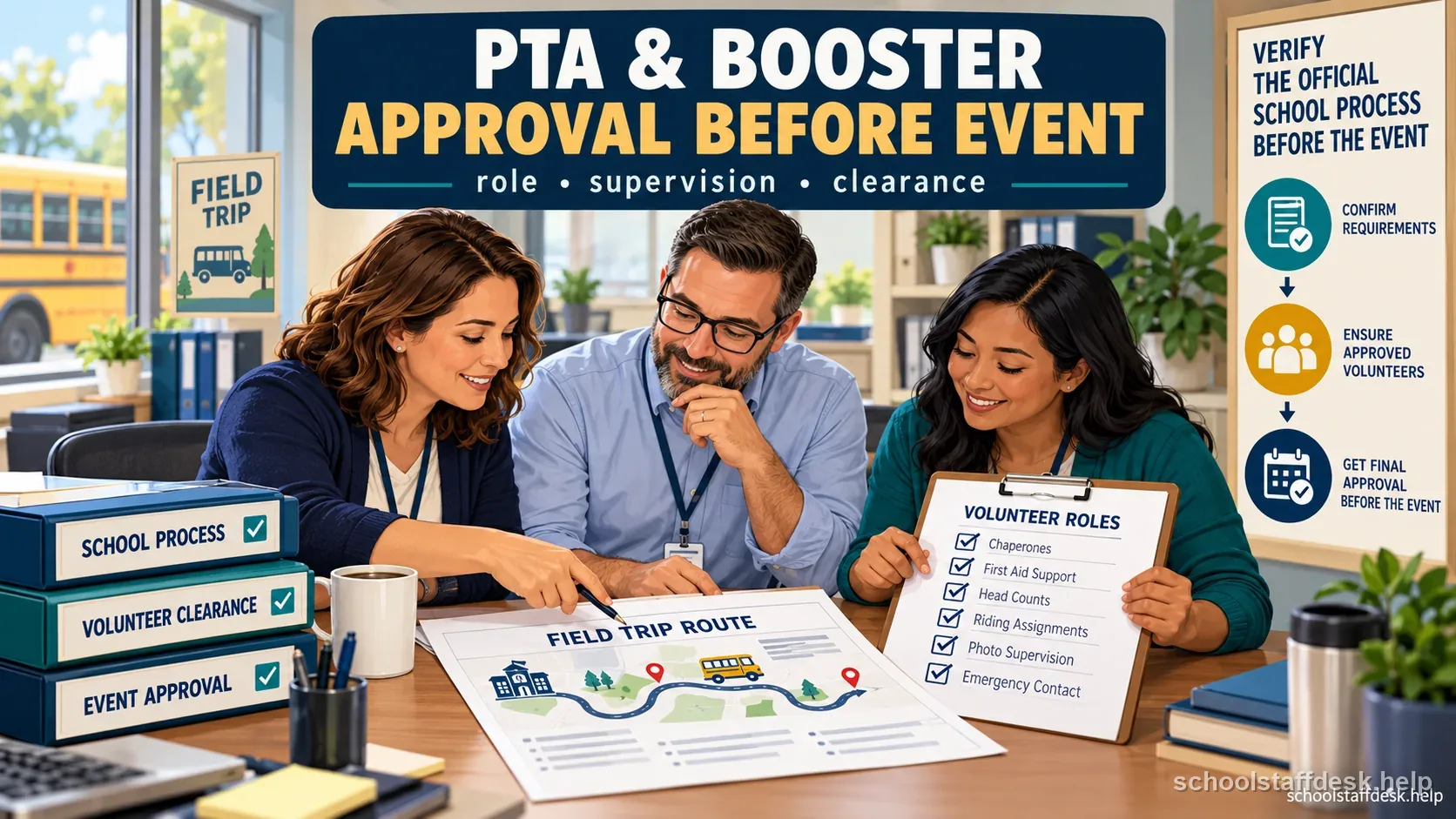
A school group may recruit outside the district portal. Before a PTA event, booster trip, sports season, or overnight activity, agree in writing who approves the role, which policy governs, how supervision works, and who confirms clearance. A nonprofit or league check does not automatically replace a school requirement.
Do not promise a trip spot because a family paid a fee or the adult passed another group’s check. If a school employee receives a report of possible sex-based harassment during a trip, the district’s Title IX reporting steps are separate from screening approval. Ask the coordinator to classify the duties, including student-group supervision, driving, and one-to-one contact. If approval is incomplete, find another cleared supervisor or change the assignment. For a supervised one-time guest with no care role, follow visitor procedures and state guidance.
Sources used for this guide
- Pennsylvania Department of Education — School Volunteer Clearance FAQs
- Florida Senate — 2026 Statutes § 1012.465
- California Department of Justice — CalVECHS FAQs
- Federal Trade Commission — Using Consumer Reports: What Employers Need to Know
Rules can change. Use these sources as a starting point and confirm any state, district, student-plan, employment, licensing, or retirement requirement with the agency or team that governs your situation.
Questions school staff ask about this situation
Does a one-time field-trip chaperone need the same checks as a weekly classroom volunteer?
Not everywhere. Pennsylvania guidance distinguishes occasional supervised chaperones from volunteers with routine direct contact or responsibility for a child’s welfare. Another state or district can set a different rule. Give the coordinator the trip duties and supervision plan before promising a spot.
Can I accept a clearance from another school or youth organization?
Only if the governing authority and district process accept it. Pennsylvania allows certain volunteer certifications obtained within the previous 60 months to be used for other volunteer activities, but that is not a nationwide portability rule. Ask the authorized reviewer before relying on a prior check.
What should I do if a report appears to belong to the wrong person?
Do not forward it to teachers or decide eligibility yourself. Pause the assignment, protect the report, and refer the identity dispute to the district reviewer or screening provider under the approved process.
Can a PTA or booster club clear its own volunteers?
The group may have its own process, but that does not automatically satisfy school or state requirements. Have the district and group agree who approves student-facing duties and how the school verifies clearance before an event.
Can the school tell a family whether a volunteer passed?
That depends on privacy, records, and district rules. Staff can point to the public policy and the volunteer coordinator without sharing another person’s report or individual screening details.