Why Title IX reporting is a separate duty from mandated reporting
General mandated-reporter laws may require designated people to report suspected child abuse or neglect to a state agency or law enforcement. Title IX is a separate federal civil-rights framework. Under the 2020 regulations now in force, notice to any employee at an elementary or secondary school of conduct that could constitute Title IX sexual harassment gives the school actual knowledge that can trigger its response duty. This recipient-knowledge rule is not the same as a separate federal instruction that every employee personally notify the coordinator. State law and district policy may add an individual reporting duty, so check the route that applies to your role.
The duties can overlap. A report involving a student may call for both a state child-abuse report and a Title IX response. They have different triggers and destinations, so completing one does not automatically complete the other.
The federal rule changed again in September 2026
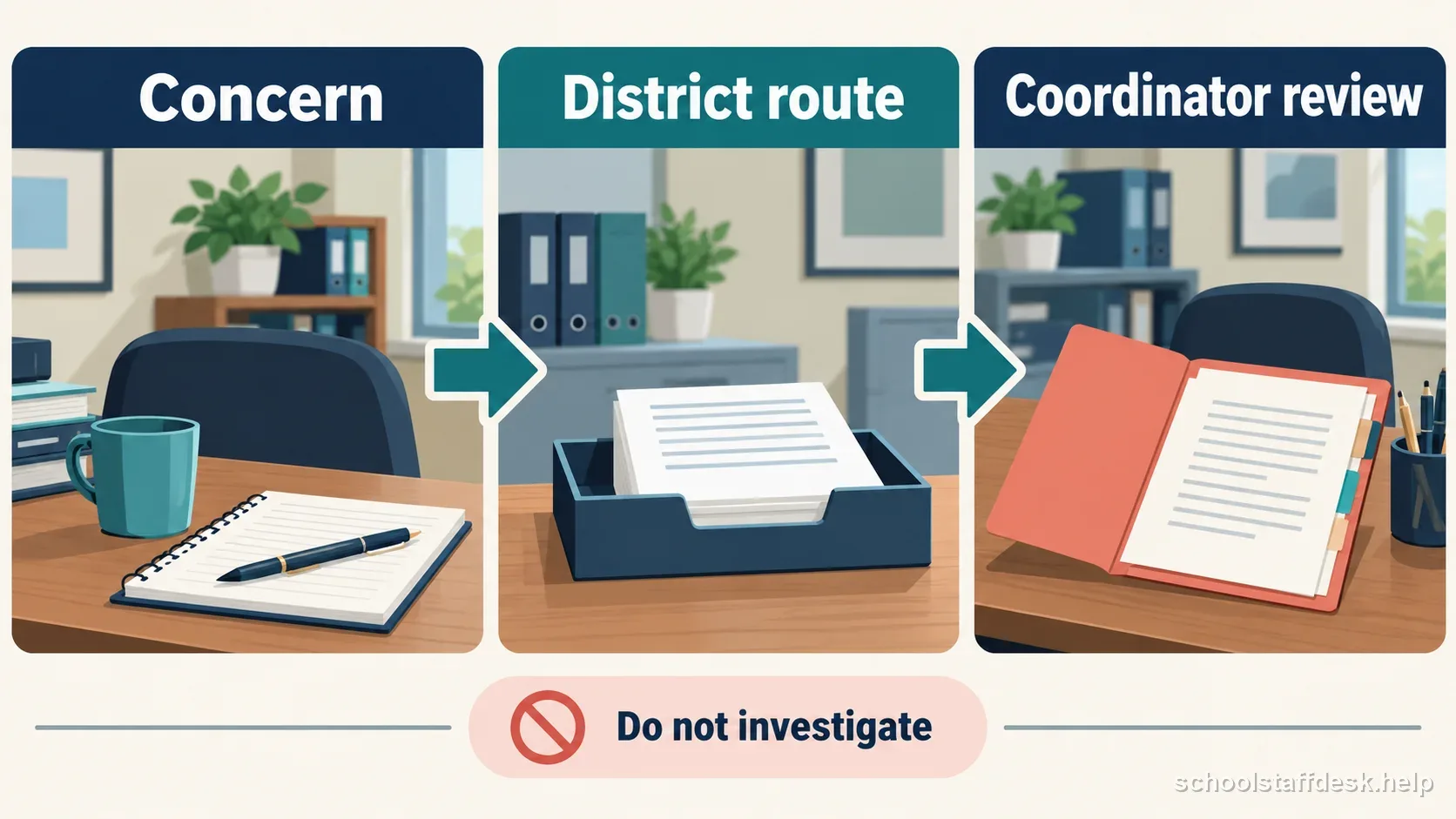
The Department of Education’s 2024 Title IX rule was vacated nationwide by a federal court in January 2025. On September 29, 2026, a final rule took effect, formally repealing the vacated 2024 text and restoring the regulatory text that existed before that rule: the 2020 regulations. The September 2026 action codified a framework the department had already been enforcing after the court decision.
The restored definition of actual knowledge includes notice of sexual harassment or allegations of sexual harassment to a Title IX coordinator, an official authorized to institute corrective measures, or any employee of an elementary or secondary school. That definition concerns when the school has notice. It does not by itself tell every employee which internal form, supervisor, or personal reporting deadline to use. Check your current district policy, role-specific training, and state law.
Title IX reporting vs. general mandated reporting: how they differ
| Question | Title IX reporting | General mandated-reporter law |
|---|---|---|
| What it covers | Sex-based harassment and discrimination | Suspected child abuse or neglect |
| Who you report to | The school's designated Title IX coordinator | State child-welfare agency or law enforcement, per state law |
| Legal source | Federal Title IX regulations; under the restored 2020 rule, K-12 notice-to-any-employee actual knowledge applies to sexual harassment | State-specific mandated-reporter statutes |
| Does federal Title IX automatically require every K-12 employee to notify the coordinator? | Not under the restored 2020 rule; state law or district policy may create that employee duty | State law separately determines who must report suspected abuse and to whom |
| Does one duty replace the other? | No: a situation can trigger both duties separately | No: a situation can trigger both duties separately |
- Use the correct triggerThe restored 2020 rule’s K-12 notice-to-any-employee standard applies to potential Title IX sexual harassment.
- Check your employee dutyFederal school-level knowledge and your personal duty to notify the coordinator are distinct; check policy and state law.
- Protect privacyAvoid promising confidentiality beyond what the process allows.
- Check for a second reportPossible child abuse may require a separate state report; an internal Title IX report does not replace it.
| Situation | First route | What to share |
|---|---|---|
| Potential Title IX harassment | District Title IX channel | Observed facts and when you learned them |
| Possible child abuse | State-required reporting channel | Facts required by state instructions |
| Immediate safety risk | School emergency procedure | Location, immediate risk, and urgent help needed |
What staff are generally expected to do when they learn of a potential issue
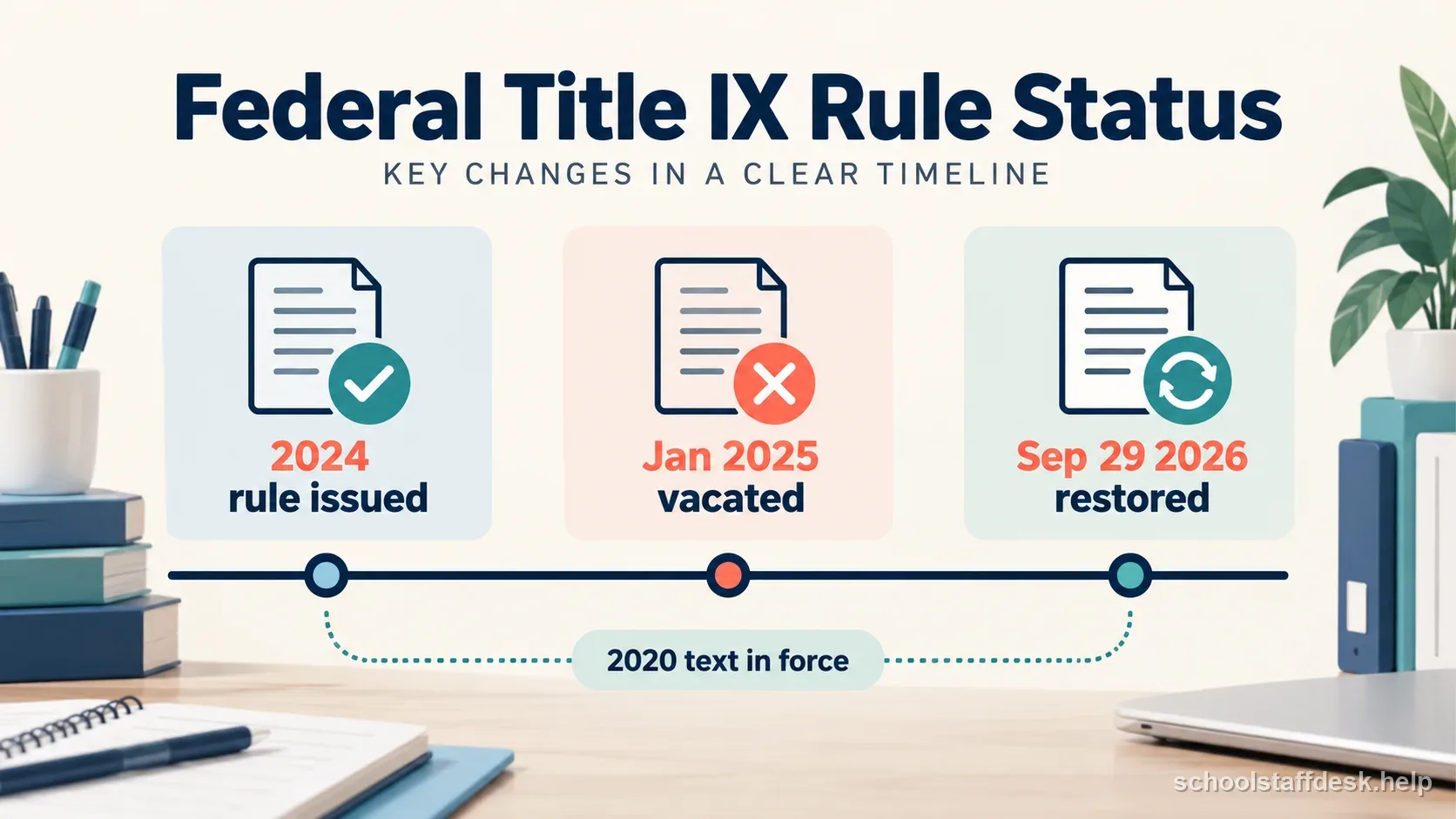
If you learn about possible sex discrimination or harassment, use the district’s current reporting route promptly. Do not investigate, decide whether the conduct meets a legal definition, or promise confidentiality. The actual-knowledge rule for a K-12 school applies to notice of conduct that could constitute sexual harassment under the federal regulation. Broader sex-discrimination concerns may involve other Title IX duties, state law, or local policy.
The 2024 rule added an explicit requirement for K-12 recipients to require non-confidential employees to notify the coordinator. Courts vacated that rule nationwide, and the final rule effective September 29, 2026 formally repealed it. A district may still require employees to report through local policy or state law. Confirm the current route with the coordinator and use it even when you are unsure how the report will be classified.
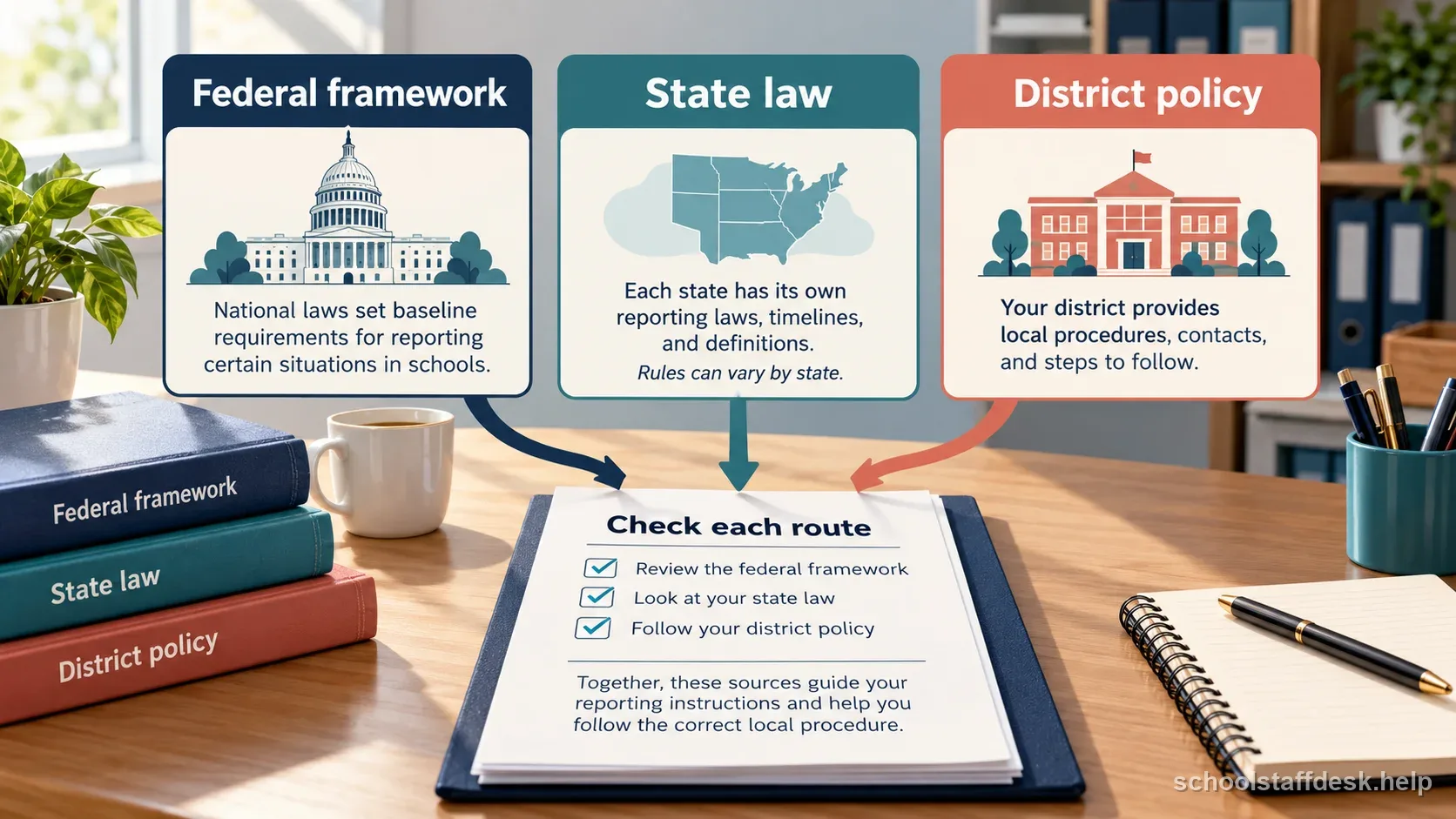
A school process does not cancel a separate state-law reporting duty.
Confidentiality, retaliation protection, and where to go with questions
Title IX prohibits retaliation against someone for exercising rights protected by the law or participating in a Title IX process. Privacy is handled carefully but is not absolute: the school may need to share information to respond, and local policy may define who receives a report. Before inviting a disclosure, explain any reporting role you have and do not promise that information will stay only between you and the student or colleague.
If you are unsure whether the facts fit a legal definition, use the district's reporting procedure or ask the coordinator how to route the concern. You are not the investigator or decision-maker. If there is an immediate safety risk or suspected child abuse, follow emergency and state mandated-reporter procedures too; an internal Title IX report does not replace them.
Title IX also covers staff-to-staff situations, not only student concerns
Title IX also addresses sex discrimination in covered recipients' employment practices, so a staff member facing workplace discrimination or harassment may have a Title IX route as well as a separate Title VII route. Which law covers the conduct and which office should receive the report depend on the facts and the district's policy. A Title IX report does not automatically file an EEOC charge or preserve its deadline.
If you are unsure whether facts fit a legal definition, use the district procedure or ask the coordinator where to route the concern. You are not the investigator or decision-maker. If an immediate safety risk or suspected child abuse is involved, follow emergency and state reporting procedures too; an internal Title IX report does not replace them.
Training requirements depend on the current regulation and the staff member's role. Ask the Title IX coordinator what training applies to you and whether your materials reflect the 2020 regulatory text restored by the final rule effective September 29, 2026. A training deck that presents the vacated 2024 rule as current may misstate the governing federal framework.
Title IX reporting and general mandated reporting are separate duties. Follow the applicable route for each concern and do not assume one report satisfies both.
Title IX and state child-abuse reporting may both apply.
Respond to a disclosure without investigating
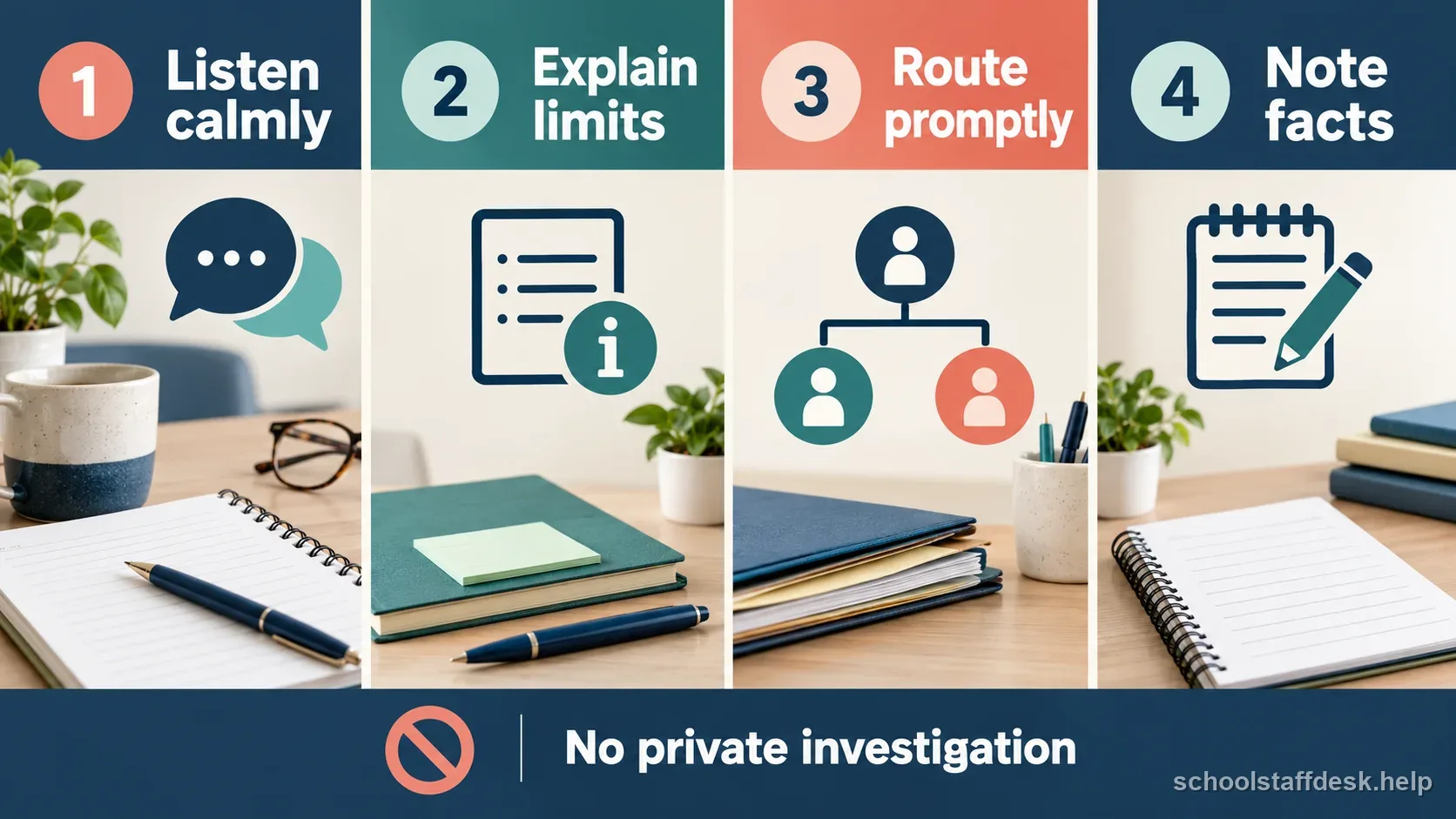
Listen without pressing for a full account. Tell the person what you can do next and explain any limits on privacy before sharing details. If the person is in immediate danger, use the school emergency procedure first. Otherwise, identify the district’s designated report channel and pass the concern to the correct contact promptly under local instructions.
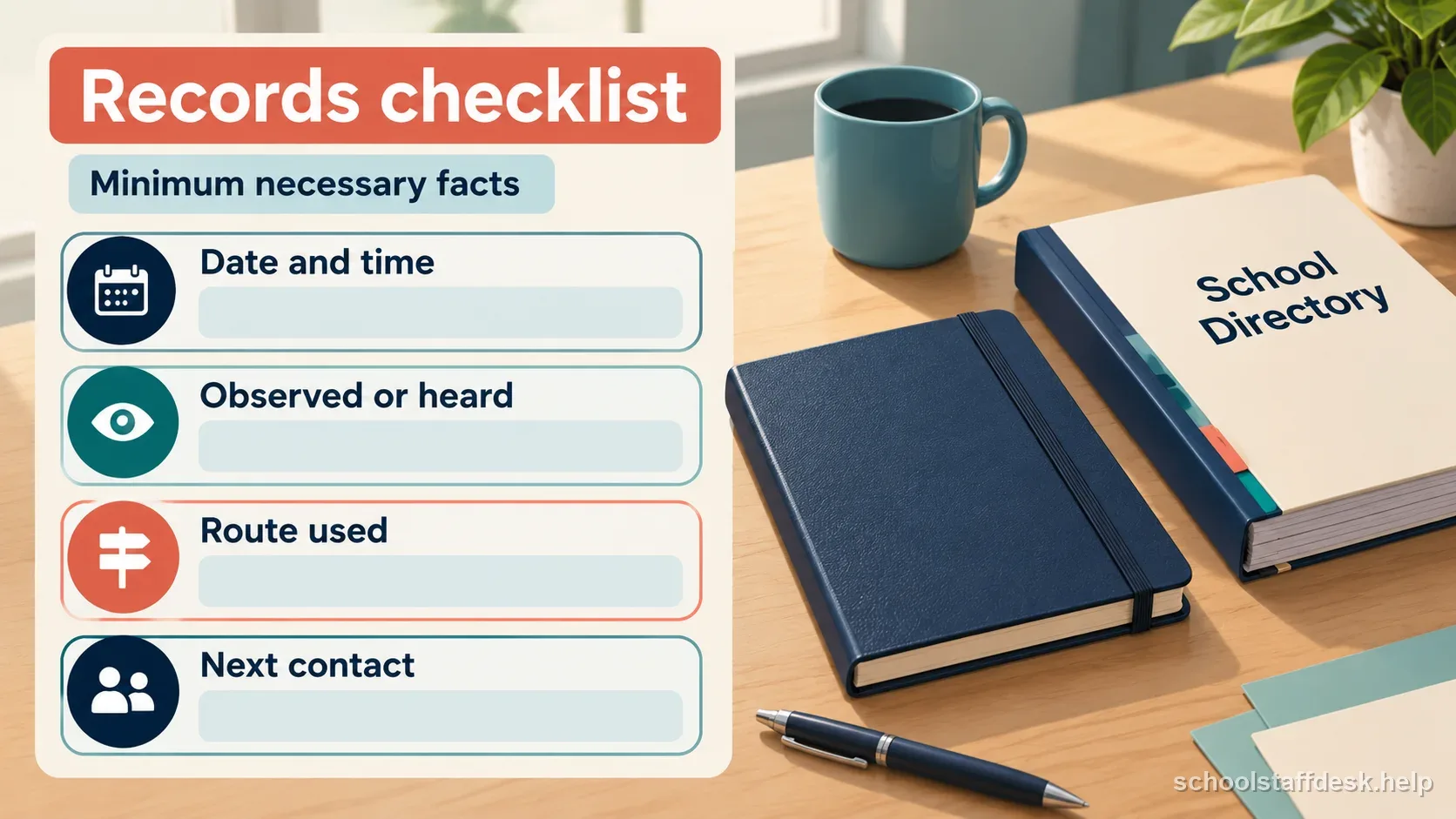
Write down only what helps the designated reviewer understand the report: when you learned of it, what you personally observed or heard, the person’s own words when useful, and the route you used. Separate direct observations from secondhand information. Do not interview witnesses, collect screenshots on personal devices, or circulate the account in staff chat. Keep records in approved systems and ask the coordinator how to handle follow-up.
- Use the current district channel and identify who received the report.
- Separate what you saw from what someone else told you.
- Check whether state law requires a second direct report.
- Keep personal copies and informal staff messages out of the record.
- Ask the coordinator where to send later information.
Use the district’s approved system and preserve only what your role requires.
Two examples show how reporting routes can overlap
Illustrative example 1: at 8:10 a.m., a paraeducator hears a student describe repeated sex-based comments during a school activity. At 8:15, the paraeducator uses the district’s designated Title IX channel and records the time, the words remembered, and who received the report. Those five minutes are sample arithmetic, not a federal deadline. The coordinator decides the next process; the employee does not question classmates or label the conduct.
Illustrative example 2: at 1:00 p.m., a staff member hears information that may indicate child abuse and also possible sex-based harassment at school. The employee follows the state’s child-abuse reporting instructions and the district’s Title IX route as separate tasks. If the state requires a direct report, telling a supervisor alone may not satisfy it. The employee checks both confirmations and does not assume that the first call closed the second route.
Use an alternate route if the usual contact is involved
If the person named in a concern is the principal, supervisor, or usual contact, do not send the report only to that person. Use another listed Title IX coordinator or the district channel that delivers information directly to the coordinator. The federal rule requires a recipient to designate at least one coordinator and lets a person report by any means that results in the coordinator receiving the report.
Use the published contact information and keep a brief record of when and how you sent the concern. If you do not know whether the right office received it, follow the district’s backup route or ask another listed coordinator. For a suspected child-abuse report, still check whether state law requires a direct report to an outside agency.
Sources used for this guide
- Federal Register: 2020 Title IX Final Rule
- Federal Register: Recodification of Title IX Rules, effective September 29, 2026
- HHS Children’s Bureau: Mandatory Reporting of Child Abuse and Neglect (state-law survey, current through May 2023)
Rules can change. Use these sources as a starting point and confirm any state, district, student-plan, employment, licensing, or retirement requirement with the agency or team that governs your situation.
Questions school staff ask about this situation
Is Title IX reporting the same as general mandated-reporter law?
No. Title IX and the state child-abuse reporting statute have different triggers and destinations; one report does not automatically satisfy the other. Follow both routes when both apply.
What happened to the 2024 Title IX regulations?
A federal court vacated the 2024 regulations nationwide in January 2025. A final rule effective September 29, 2026 formally repealed that text and restored the regulatory text that existed before it: the 2020 regulations. Also check applicable state law and your district's current policy.
Who should a staff member notify about a potential Title IX issue?
Use the district's current reporting route, usually the Title IX coordinator or a designated reporting channel, and do not investigate it yourself. Under the restored 2020 rule, K-12 notice to any employee of potential Title IX sexual harassment gives the school actual knowledge, but a separate personal duty to notify the coordinator comes from applicable state law or district policy.
Can a staff member be retaliated against for making a good-faith Title IX report?
Title IX prohibits retaliation for exercising rights protected by the law or participating in a Title IX process. Preserve a record of any suspected retaliation and ask the coordinator about the applicable process.
What should I do if I'm not sure whether something rises to a Title IX report?
Notify your school's Title IX coordinator and let them make the determination rather than deciding on your own that the threshold isn't met.